High-tech Enterprise Dedicated to the Research and Development
Learn more

High-tech Enterprise Dedicated to the Research and Development
Learn more

About us

Dedicated to the development and research of internet technology

Sengyang Energy is a high-tech enterprise dedicated to the research, development, production, application development, and sales of lithium battery materials, process technology, and intelligent production lines. We focus on addressing the key challenges faced by startups as they transition from laboratory research to mass production, offering comprehensive end-to-end solutions that cover improvements in automation efficiency, process support for gel and composite materials, precise metering of solid powders, and contract manufacturing for solid-state batteries.

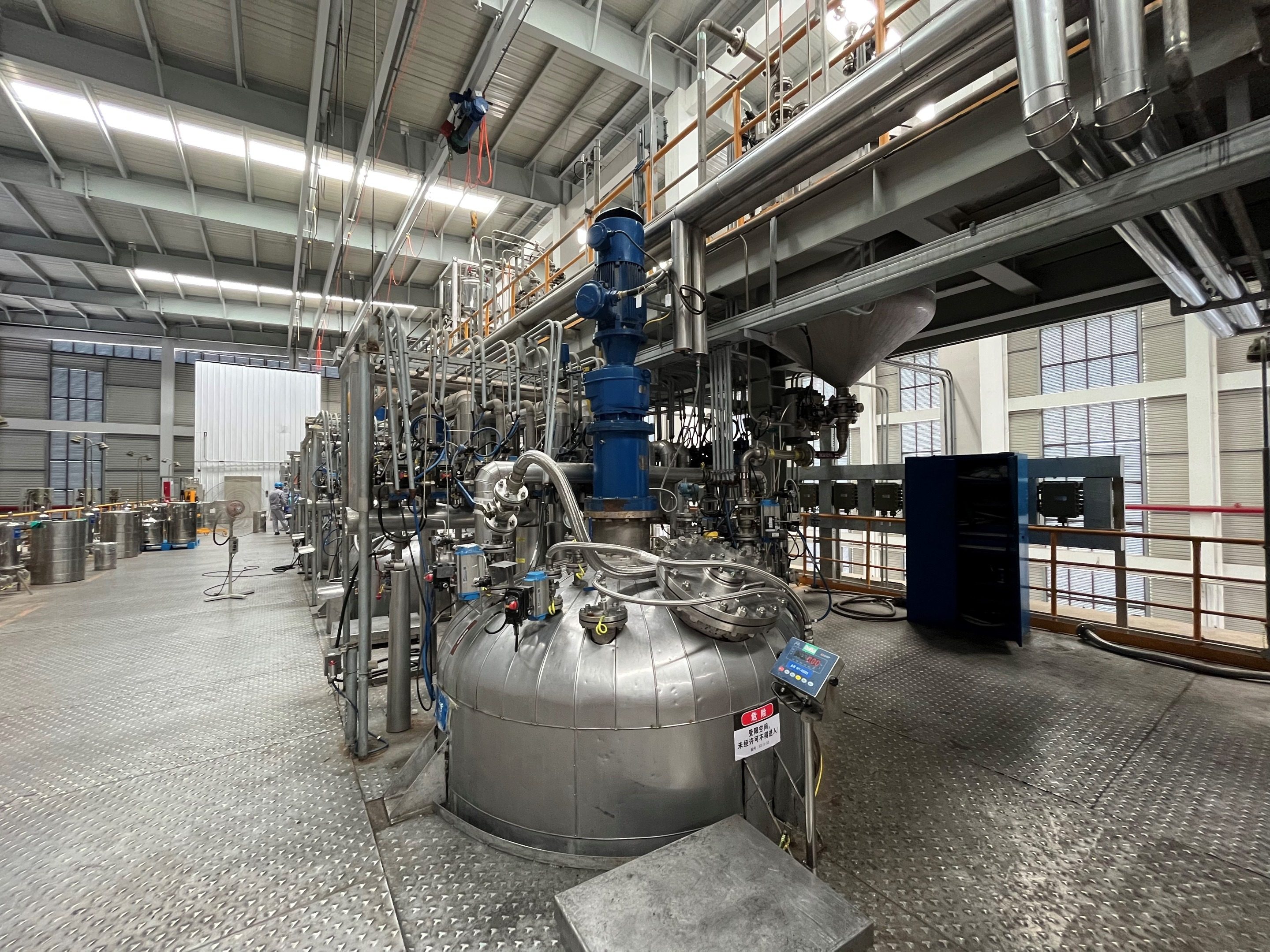
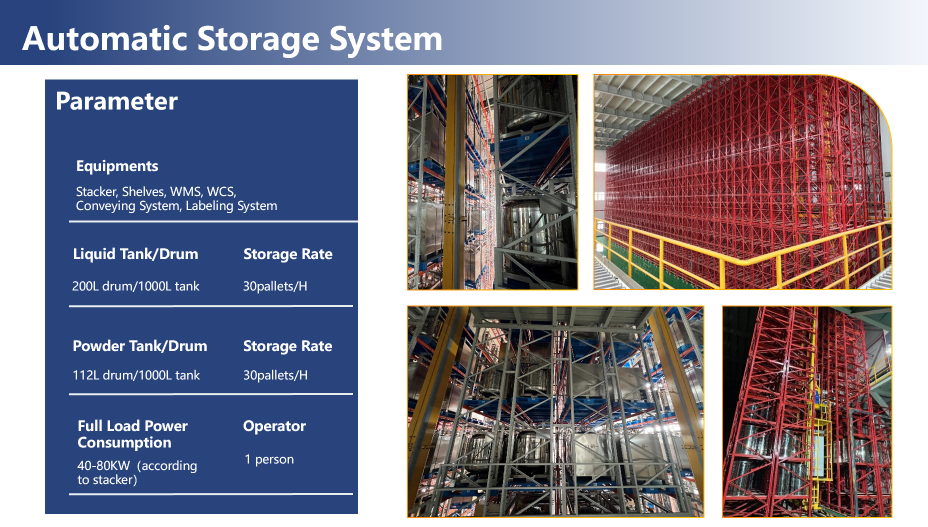
Our product portfolio includes lithium-ion battery electrolyte additives, electrolyte samples, electrolyte pilot production lines, intelligent automated tank cleaning lines, intelligent automated filling lines, and lithium salt automatic conveyor systems. Additionally, we provide technical consulting services such as professional factory design for lithium battery electrolyte production lines, process technology improvement, electrolyte formulation development and application, and intelligent automation system solutions.

Sengyang Energy boasts a strong R&D and production application technology team, with key expert members coming from renowned industry-leading companies, bringing deep industrial experience and technical expertise. We not only provide advanced equipment and materials but also focus on supporting our clients throughout their growth journey—helping them master core technologies and processes, offering production guidance, systematic training, and facilitating a smooth transition from the laboratory to mass production.

Our Solutions

Provide a variety of communication and video capabilities Comprehensively meet business needs

Intelligent Omni-channel Communication

Deliver precise and efficient cloud-based telesales and customer service solutions to empower enterprise digital transformation

Learn more

Smart call center

Precise and efficient cloud electricity sales+Omnic channel cloud customer service helps enterprise industrial upgrading

Learn more

Enterprise SMS Services

Ensure high delivery rates with tri-network coverage, designed to meet various enterprise communication scenarios

Learn more

Data Intelligence Platform

Offer number detection and screening services to effectively reduce marketing costs and improve conversion rates

Learn more

100+
Country and region
999Ten thousand+
Usage amount
850Ten thousand+
Active user
900Ten thousand+
Cover terminal

News

The latest information is the first to watch

Impurities in electrolyte additives Impurities in electrolyte additives
Miscellaneous impurities in electrolyte additives: 1. Impurities are unavoidable, and what impurities matter. 2. Some compatible impurities. 3. Little influence on impurities sulfate fluorion phosphate carbonate dimer or trimer residual solvent 4. Very large impurities chloride ions: water alcohols, aldehydes, acids, substances containing active hydrogen impurities Metal ions: environmental pollutants: 5. The impact is not clear. First of all, whether it is a benign influence or a small influence, it is not "do not control". All impurities need to be regulated, at least to know how much their content is, at least how much is allowed to depend on their nature.
New electrolyte additive helps stabilize cycling of 5V lithium metal batteries (EES) New electrolyte additive helps stabilize cycling of 5V lithium metal batteries (EES)
In recent years, based on cobalt-free LiNi0.5Mn1.5O4 (LNMO) positive electrode (5 V class, vs. Li+/Li) and lithium metal anode (3.04 V vs. Ultrahigh pressure lithium metal batteries with standard hydrogen electrodes have attracted a lot of attention as promising candidates for the next generation of high energy density and sustainable batteries due to their theoretical energy density of up to ~650 Wh/kg. In contrast to the unstable layered oxide LiNixCoyMnzO2, the toxic Co element caused by the LNMO spinel structure is eliminated and the inherent safety is eliminated. However, their development is severely limited by the incompatibility between the state-of-the-art carbonate electrolyte and the two aggressive electrodes. Here, we have synthesized a new electrolyte additive,2, 2-difluoroethylmethyl sulfone (FS), which enables stable cycling of ultra-high pressure lithium metal batteries in conventional carbonate electrolytes. On the cathode side, unlike conventional electrolyte additives, FS can be selectively adsorbed on the LNMO surface to form a special assembled FS "buffer" layer that can effectively remove free carbonate molecules from the cathode surface. Therefore, during charging, the -CF2H group of FS is well decomposed by the anode to form an inorganic rich CEI, which effectively inhibits the micro-fracture and transition metal dissolution of LNMO. On the anode side, FS can also perform cathode decomposition well, resulting in an inorganic rich SEI for stable cycling of Li metal anodes. As a result, the carbonate electrolyte containing FS additives gives cobalt-free 5V-class lithium metal batteries unprecedented high performance, i.e. a 40um-Li /LNMO (load = 7 mg·cm2) full battery with a high capacity retention rate of 84% for 600 cycles at 1C using a commercial carbon-based low-concentration electrolyte. A complete battery consisting of a highly loaded cathode (20 mg·cm2) and an ultra-thin lithium anode (40 mm) has a capacity retention rate of 99% after 100 cycles at 0.25C. In addition, to our knowledge, previously unreported Li/LNMO bag-like batteries have been assembled and can run stably for more than 150 cycles. This paper is based on Rational molecular design of electrolyte additive endows stable cycling performance of cobalt-free 5 V-class lithium metal batteries, published in Energy & Environmental Science.
Uses of LiDFOB and TMSP Additives Uses of LiDFOB and TMSP Additives
The document describes two electrolyte additives for lithium-ion batteries: LiDFOB (Lithium Difluoro(oxalato)borate) and TMSP (Tris(trimethylsilyl) phosphite). LiDFOB is a multifunctional lithium-salt-type additive that primarily forms a dense, ion-conductive SEI film on the anode (graphite/silicon/lithium metal), improving initial Coulombic efficiency and cycle life, while also stabilizing the cathode interface under high voltage (≥4.5 V) and enhancing both low-temperature conductivity and high-temperature thermal stability. TMSP is a cathode film-forming additive designed for high‑nickel ternary systems (e.g., NCM811) at high voltages (4.4–4.6 V); it forms a thin, P/Si‑containing CEI layer on the cathode, scavenges HF to prevent corrosion, reduces interfacial impedance, and improves capacity retention by over 20% under 4.5 V cycling. When used together at 1% each, LiDFOB and TMSP synergistically build stable SEI and CEI layers, suppress structural degradation and gas generation in NCM811 cathodes even at 4.7 V, and improve cycle life by more than 30% while maintaining balanced performance across high and low temperatures.
NCM811 battery achieves stability at 4.8V NCM811 battery achieves stability at 4.8V
Researchers led by Professor Guangliang Liu at Shenzhen University have developed a mechanically adaptive polyimide (PI) coating for single-crystal NCM811 cathodes to stabilize high-voltage operation in sulfide-based all-solid-state batteries. Published in Advanced Science, the study introduces a nanoscale PI interface that provides a triple synergy of chemical anchoring, mechanical adaptability, and electrochemical self-optimization. The PI coating chemically bonds to the cathode surface, removing detrimental residual lithium compounds and passivating the interface. Its viscoelastic nature dramatically lowers the cathode’s Young's modulus, allowing it to absorb volume changes and prevent microcrack formation. Remarkably, the PI interface exhibits a “negative aging” effect, where interfacial impedance decreases by 38% during cycling, indicating dynamic structural evolution that improves ion transport. This innovation yields exceptional performance: at 4.3V, capacity retention reaches 83.6% after 400 cycles (vs. 33.2% for uncoated). Even under extreme conditions of 4.8V, a thicker PI coating maintains 85.9% capacity retention. This work offers a powerful solution to the critical interface challenges facing next-generation high-energy-density solid-state batteries.

Online service

  Telephone:400-888-8888

 Mail:jackyang@senyangenergy.com

 Wechat:xiaoyang_1982